Voltage Sag
RMS voltage falls below the equipment tolerance window for a fraction of a second.
Wilson Technology · Industrial Power Continuity Solutions
Protect critical production lines from voltage sags and momentary interruptions with high-power, short-duration ride-through solutions.
Problem first. Protection architecture second. Technology only where it fits.

The hidden outage
The grid recovers quickly. The process does not. The first electrical trip can trigger hours of mechanical, thermal, material, and quality recovery.
RMS voltage falls below the equipment tolerance window for a fraction of a second.
The drive DC link crosses an undervoltage threshold before the grid recovers.
One trip propagates through controls, auxiliaries, and the coordinated process.
Material loss, cleaning, re-threading, heating, stabilization, and quality checks extend recovery.
“The grid recovered in 0.5 seconds. Your factory took 3 hours to recover.”
Start with the event
A voltage sag—also called a voltage dip—is a short reduction in RMS voltage. A drive or control system may cross its trip threshold before the supply returns to normal.
The event may be too short to be called a blackout—but long enough to trip a VFD.
Why does a VFD trip? →Trace the failure path
Protecting the wrong boundary wastes capital. Find the first failure that turns a brief electrical event into a production stop.
The DC link falls below its undervoltage threshold and the inverter stops.
Support the DC bus →Control power, contactors, or interlocks reset even when the motor can coast through.
Measure the first trip →Mixed loads must survive together or the coordinated process still collapses.
Protect the whole line →Four engineering paths
Wilson Technology addresses industrial power continuity with a portfolio of assessment and ride-through architectures—not a flywheel-only catalog.
Protect selected drives
Protect a critical feeder
Bridge near-zero voltage
Measure before selecting
Decision helper
Three questions narrow the starting point. A measured power-quality assessment and OEM review are still required before design.
Preliminary path
The helper does not replace measurement, OEM review, or a protection study.
Why flywheel—when the profile fits
A flywheel can be a strong energy source for second-scale industrial ride-through. Fast response and an electromechanical storage medium are relevant where power matters more than long autonomy.
Not for every outage: long backup usually points to a battery UPS, BESS, generator, or hybrid system.
See the application boundaryProcess-specific protection
Every industry page starts from the production process, the first equipment trip, and the minimum boundary needed for continuity.
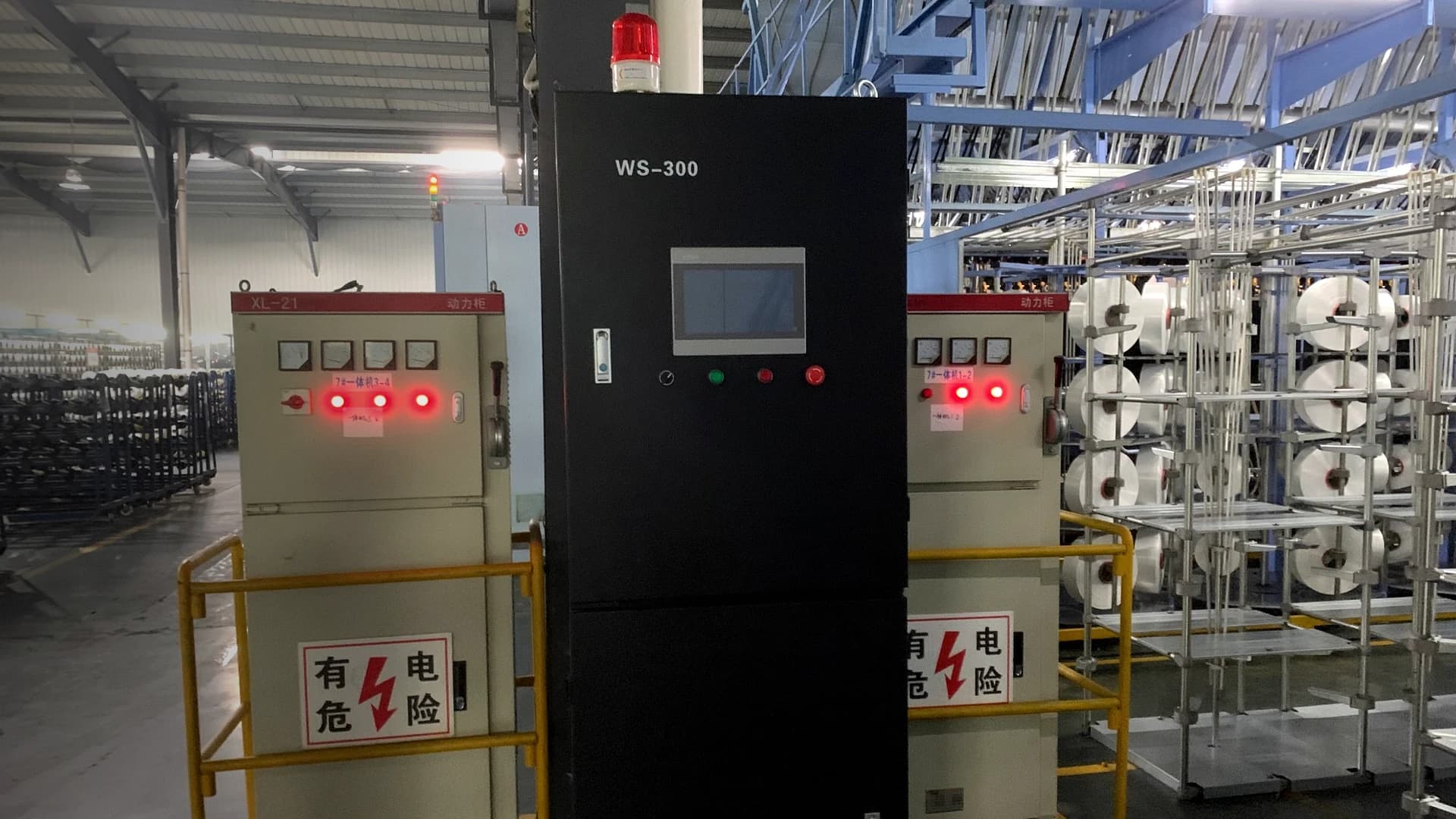
Real deployment · Customer proof
The customer is disclosed only as Chemical Fiber Manufacturer, Fujian, China. Results remain separated by system to preserve the meaning of the source records.

Eight large texturing machines protected
Voltage-sag records / successful ride-through records
Record cutoff: August 24, 2026. The counts are not presented as 18 independent plant-level voltage-sag events because the same grid disturbance may be recorded by both systems.
Read the verified case studyDowntime exposure
Use plant-approved inputs to estimate annual exposure. No customer result or savings claim is embedded in this tool.
Estimated annual voltage-sag loss
Currency follows the values you enter. This planning estimate is not a savings guarantee and does not include every operational consequence.
Get a Protection ROI AssessmentEvidence before claims
This V1 does not invent customer names, certifications, test curves, efficiency, cycle life, MTBF, or product ratings. Each public claim is limited to the evidence Wilson Technology has verified for release.
One anonymized Fujian textile deployment now has verified installation timing, protected-machine counts, and separate backend ride-through records. Additional cases remain pending.
Review the verified case →Illustrative examples are clearly labeled and kept separate from customer results.
Technical pages link to IEC, IEEE, EEHC, DOE, and other primary references where relevant.
Engineering review
Send the waveform if you have it. If not, send the load, voltage, trip sequence, and event history. We will help define the measurement and protection path.