
Whole-line continuity

Industrial Voltage Sag Protection

How to protect critical industrial feeders and production lines from voltage sags without assuming one technology fits every load.

By Wilson Technology Engineering TeamPublished 2026-08-24Last updated 2026-08-24

Answer first

Short Answer

Industrial voltage sag protection keeps a critical load operating when supply voltage falls below its acceptable window for a short time.

The correct architecture depends on residual voltage, event duration, load power, acceptable transfer behavior, and whether protection can be applied at a VFD DC bus or must cover an entire feeder.

A Dynamic Voltage Restorer (DVR), VFD DC-bus support, an online UPS, or another solution may be appropriate; measurement should come before selection.

Problem boundaryVoltage remains present but drops below equipment tolerance.
Protection scopeSingle drive, grouped VFDs, or a whole critical feeder.
First decisionMeasure depth, duration, phase behavior, and actual trip sequence.

When This Applies

This page applies when brief voltage dips trigger undervoltage protection, contactor dropout, control resets, or a coordinated production stop even though the utility supply recovers quickly.

  • VFD-driven motors trip during short grid disturbances.
  • A mixed-load production line must remain energized as a system.
  • A feeder supplies drives, controls, and auxiliary equipment with different tolerance curves.
  • Recurring events justify a measured engineering assessment rather than repeated restarts.
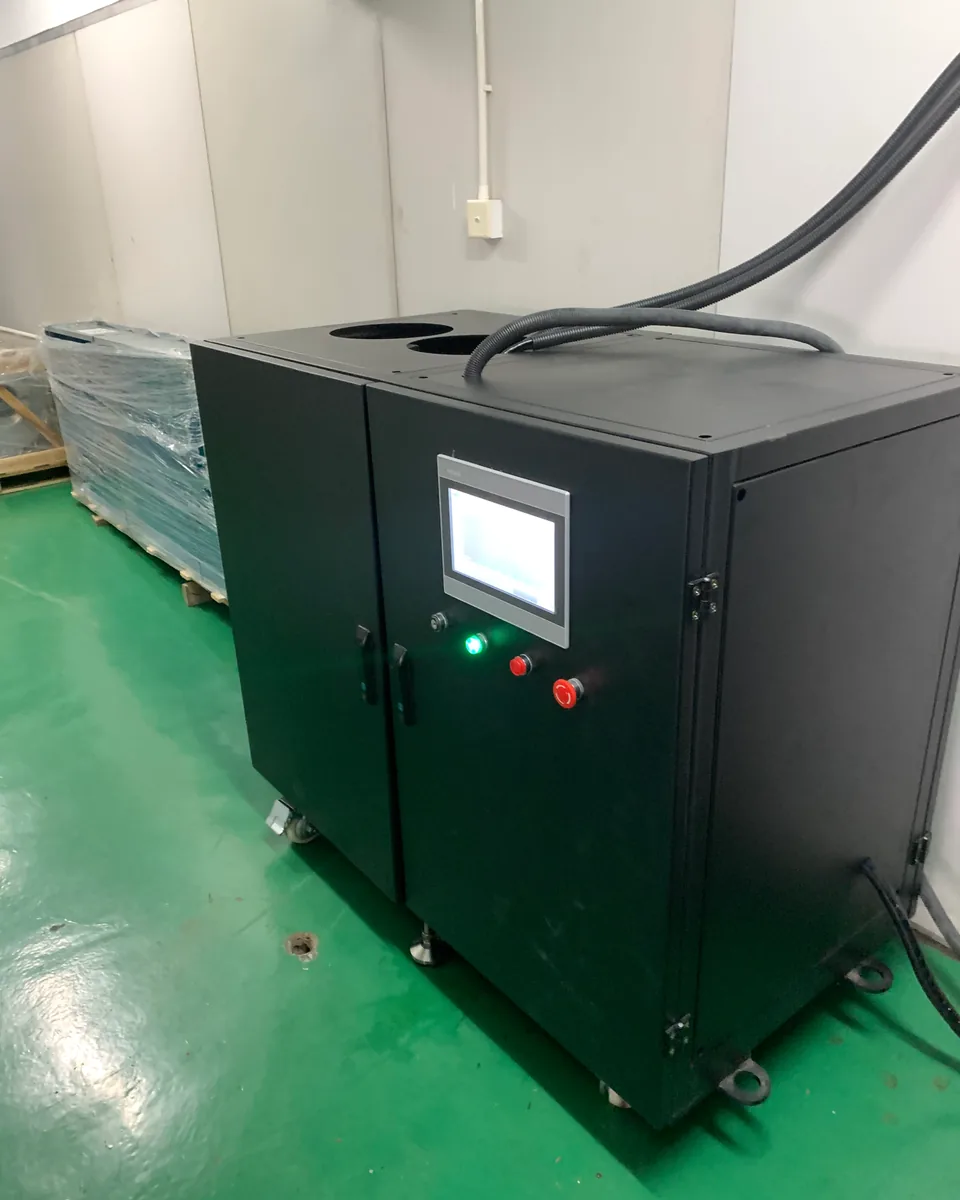
Engineering Explanation

A voltage sag is a reduction in RMS voltage for a limited duration. Equipment does not respond only to the lowest voltage: phase involvement, duration, DC-link energy, control power, protection thresholds, and process interlocks all influence the outcome.

Whole-line protection commonly injects the missing voltage in series with the supply. If the sag becomes very deep or approaches zero volts, the system must also supply real energy for the required ride-through interval.

Calculation Example

For a simplified first-pass estimate, a 500 kW protected load that must ride through 2 seconds requires 500 kW × 2 s = 1,000 kJ, or about 0.278 kWh, before conversion losses, control reserve, overload margin, and dynamic response are considered.

Alternative Solutions

ArchitectureBest fitPrimary limitation to check
VFD DC-bus supportAccessible DC links and selected critical drivesElectrical access, isolation, voltage window, and drive coordination
DVR / whole-line sag protectionMixed loads or an entire critical feederRequired injection voltage, duration, overload, and zero-voltage behavior
Online UPSSensitive loads needing conditioned power and longer autonomyScale, battery maintenance, losses, and motor-load compatibility
Process/control hardeningControl resets or contactor dropout without high energy demandDoes not solve every motor-drive or deep-sag event

Limitations / When Not to Use

  • Do not select a sag compensator before confirming the event that causes the trip.
  • Long backup times normally require a battery UPS, Battery Energy Storage System (BESS), generator, or hybrid architecture.
  • A pure reactive-power issue or motor-starting problem may call for a STATCOM, SVC, soft starter, network change, or process redesign.
  • No architecture should be described as 100% protection without a defined voltage-duration envelope and tested load behavior.

Begin with a power-quality assessment at the point of common coupling and at the sensitive load. Map each measured event to the first equipment that trips, then protect the smallest practical boundary that preserves the production process.

Traceable sources

Sources / References

  1. IEC 61000-4-30: Power quality measurement methods. Measurement and interpretation methods for voltage dips, interruptions, harmonics, transients, and other power-quality parameters. Accessed 2026-08-24.
  2. IEEE 1159-2019: Monitoring Electric Power Quality. Recommended practice for describing, measuring, and interpreting power-quality phenomena. Accessed 2026-08-24.

Engineering review

Turn an unexplained trip into an engineering decision.

Share the sag depth, duration, load, and trip behavior. Wilson Technology will help identify the protection boundary before equipment is selected.